
Qualified electronic signature for companies, with the highest probative value

A qualified signature identifies your customer unequivocally using a digital certificate, Face ID or Video ID. It is the signature with the highest probative value for your remote contracts.
3
Methods of identification
Evidence
Reverse burden of proof
eIDAS
Equivalent to a handwritten signature
With Aviva's qualified signature, you identify your customer beyond any doubt before they accept the document, for contracts where there can be no uncertainty about who signed.
There are contracts where your company cannot depend on proving who signed them after the fact. With a qualified signature, the burden of proof is reversed: if someone disputes it, the person disputing it must prove it is invalid, not your company.
How to sign with a qualified signature
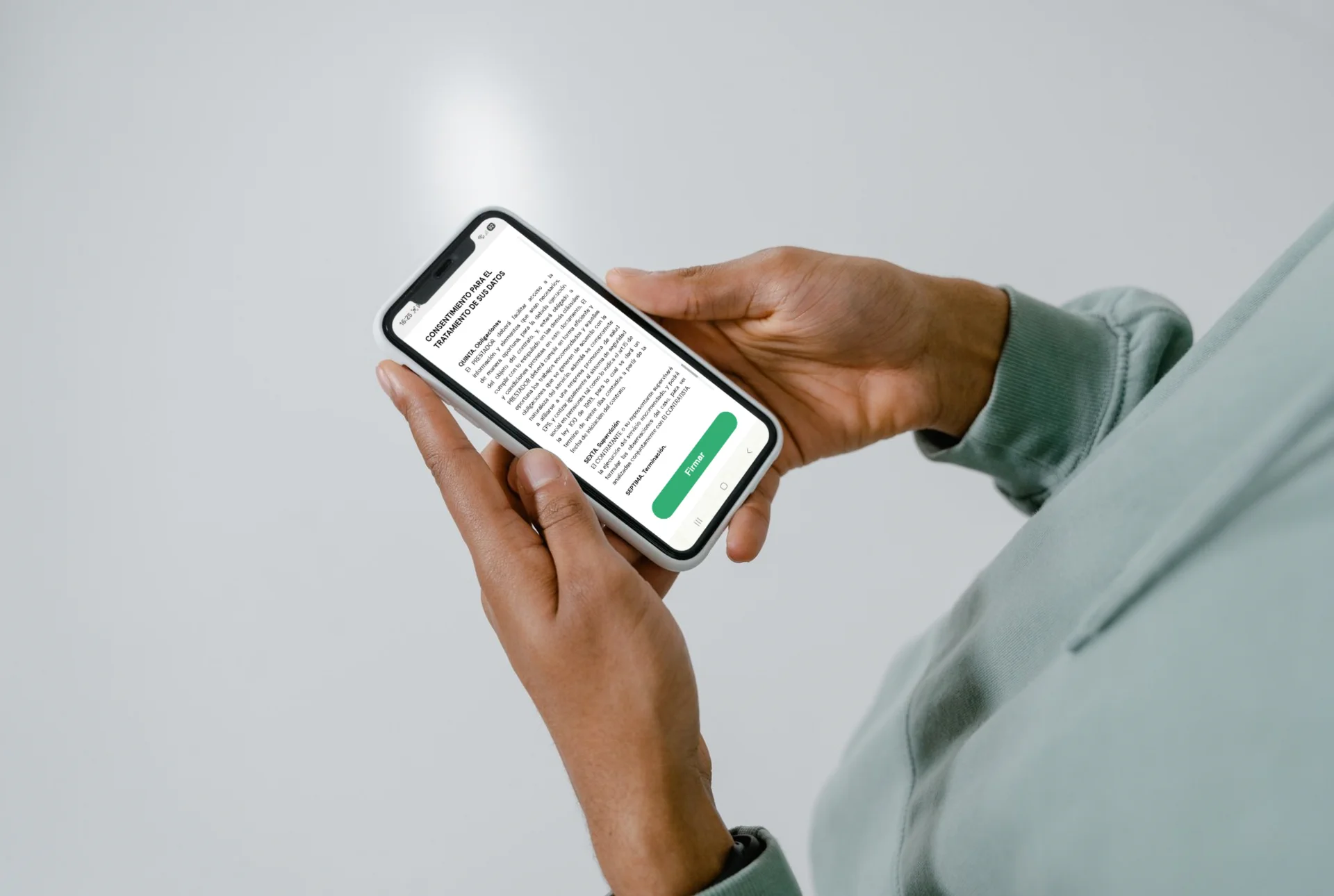
Your team launches the request from their system and your customer identifies themselves before accepting the document, using the method agreed upon for your process.
Your team sends the signature request from their system.
Your customer identifies themselves with their digital certificate, Face ID or Video ID and signs the document.
We issue the evidence certificate and store it securely in TES alongside the document.
How your customer signs
Three ways to identify the signatory

Digital certificate
Your customer signs with their own certificate.
When should you use this method?
Face ID
We compare your customer's face with the photo on their ID and verify that they are a real person.
When should you use this method?
Video ID
Your customer presents their ID and identifies themselves before the camera without having to travel.
When should you use this method?
Qualified signature and eIDAS Regulation

It is the only signature that the European eIDAS Regulation equates to a handwritten signature. At Aviva, we operate as a trust service provider under that Regulation.
What data is recorded

With each signature, we issue an evidence certificate including the date, sending, delivery, access, and the signature with its IP, and we store it with our time stamp in TES for the period specified in your contract.
Integrate the signature into your systems

You launch the qualified signature via API from your CRM, ERP, or another platform, and the entire process is displayed with your brand image. We explain the integration in electronic signature for companies.
Qualified signature FAQs

Tell us which contracts you need to sign
Tell us which documents your customers sign and what evidence you need to keep. We will propose the method of identification, how it integrates with your systems, and the cost.